Top 5 Things We Learned from G4I 2025
Top 5 Things We Learned from G4I 2025

The GovTech 4 Impact (G4I) World Congress 2025 brought together a global community of “thinkers and doers” determined to reimagine government for the next decade. Over the three congress days, one message became clear: technology may be the driver, but human needs, trust, and resilient infrastructure are the true engines of transformation.
As the congress concluded, speakers emphasized that the goal is not just digitalizing old processes but creating a societal change that strengthens democracy itself.
Based on the extensive sessions and case studies shared, here are the top five lessons learned from G4I 2025.
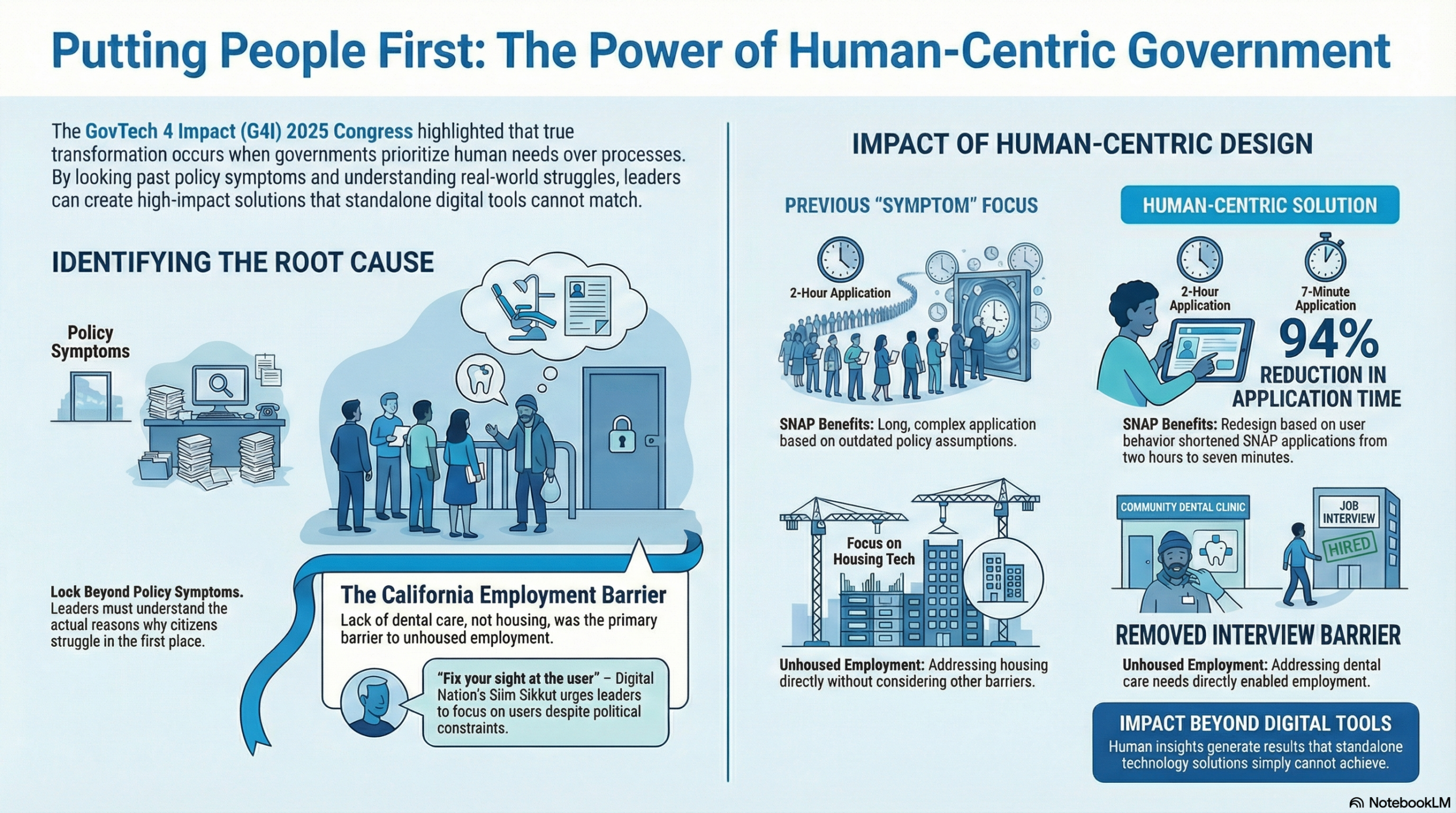
1. Human-Centricity: Solving Root Causes, Not Just Policy Symptoms
One of the strongest themes was the need to put people, not processes, at the center of every government initiative.
Tamara Srzentic, Minister of Public Administration, Digital Society and Media in the 42nd Government of Montenegro, urged leaders to look beyond matching tech solutions to policy problems. Instead, they must understand why people struggle in the first place.
A striking example came from California:
Direct interviews revealed that one of the biggest barriers to employment among unhoused residents wasn’t housing – it was lack of dental care, which prevented them from succeeding in job interviews. By addressing this real human insight, the state generated impact that no standalone digital solution could.
Similarly, redesigning the SNAP application based on real user behaviors shortened the process from two hours to seven minutes. As the Managing Partner of Digital Nation, Siim Sikkut noted, the best leaders “fix their sight at the user,” especially when political constraints make the work difficult.
Key takeaway: Governments must look past symptoms and invest in understanding lived experiences.
2. Moving AI from “Craftsman” to “Industrial” Scale
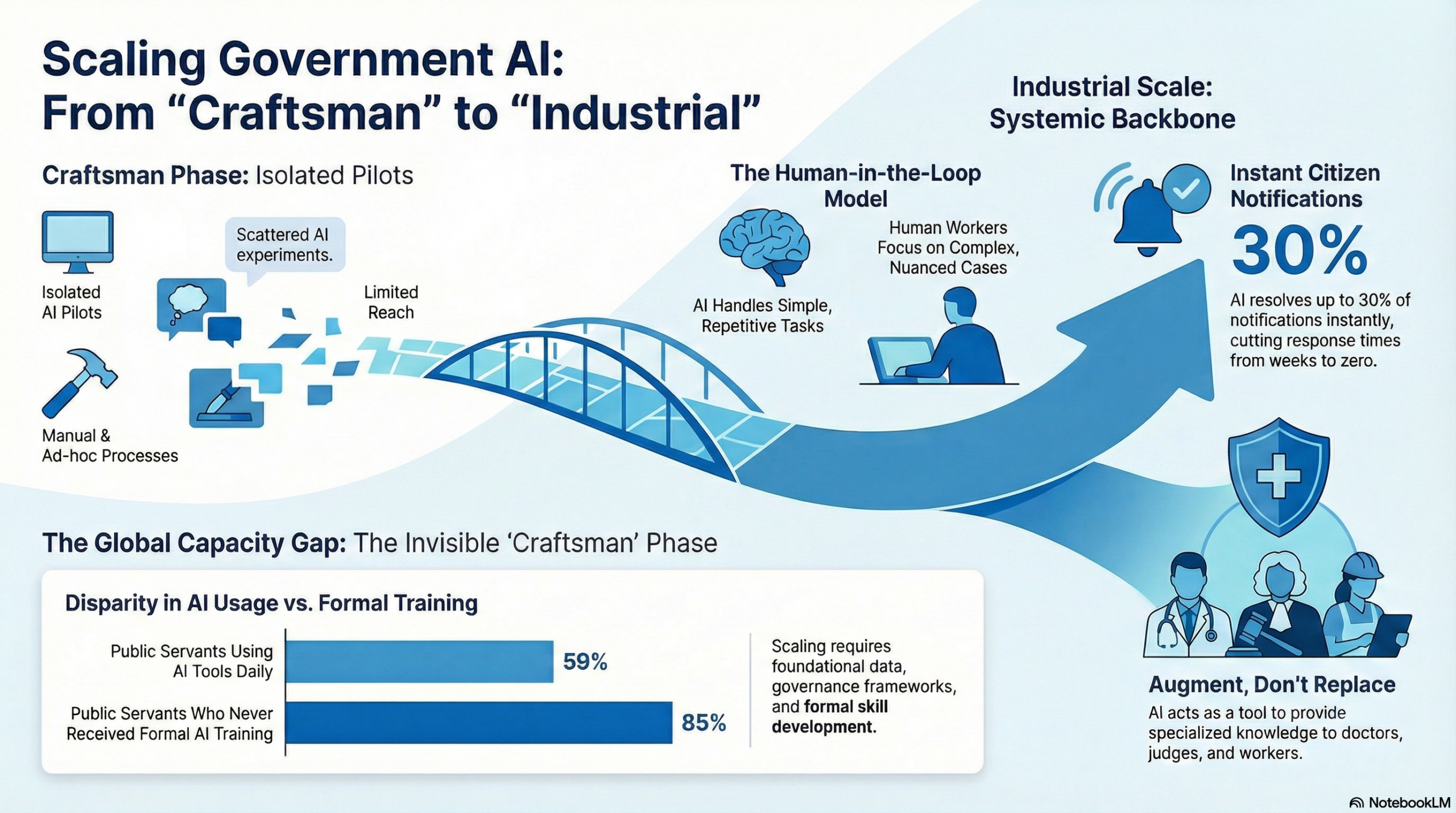
Many governments are stuck in the “craftsman phase” of AI adoption, which means isolated pilots, scattered experiments, and no systemic backbone.
To scale responsibly, countries must build strong data foundations, embed responsibility-by-design, and ensure public servants can confidently use AI. Debbie Decker, Innovation-pioneer, Urban innovation and R&D, City of Amsterdam, shared how the city uses a “human‑in‑the‑loop” model:
AI now resolves 25–30% of simple citizen notifications instantly which cuts response times from four weeks to zero, while humans handle complex cases.
Crucially, AI should augment public workers, not replace them, giving doctors rapid access to specialized knowledge or helping judges draft rulings.
But a massive capacity gap remains:
- 85% of public servants globally have never received formal AI training
- Yet 59% already use AI tools daily
Key takeaway: Without foundational data, governance frameworks, and skills, AI cannot scale safely or effectively.
3. Digital Public Infrastructure: Open Standards as a Public Good
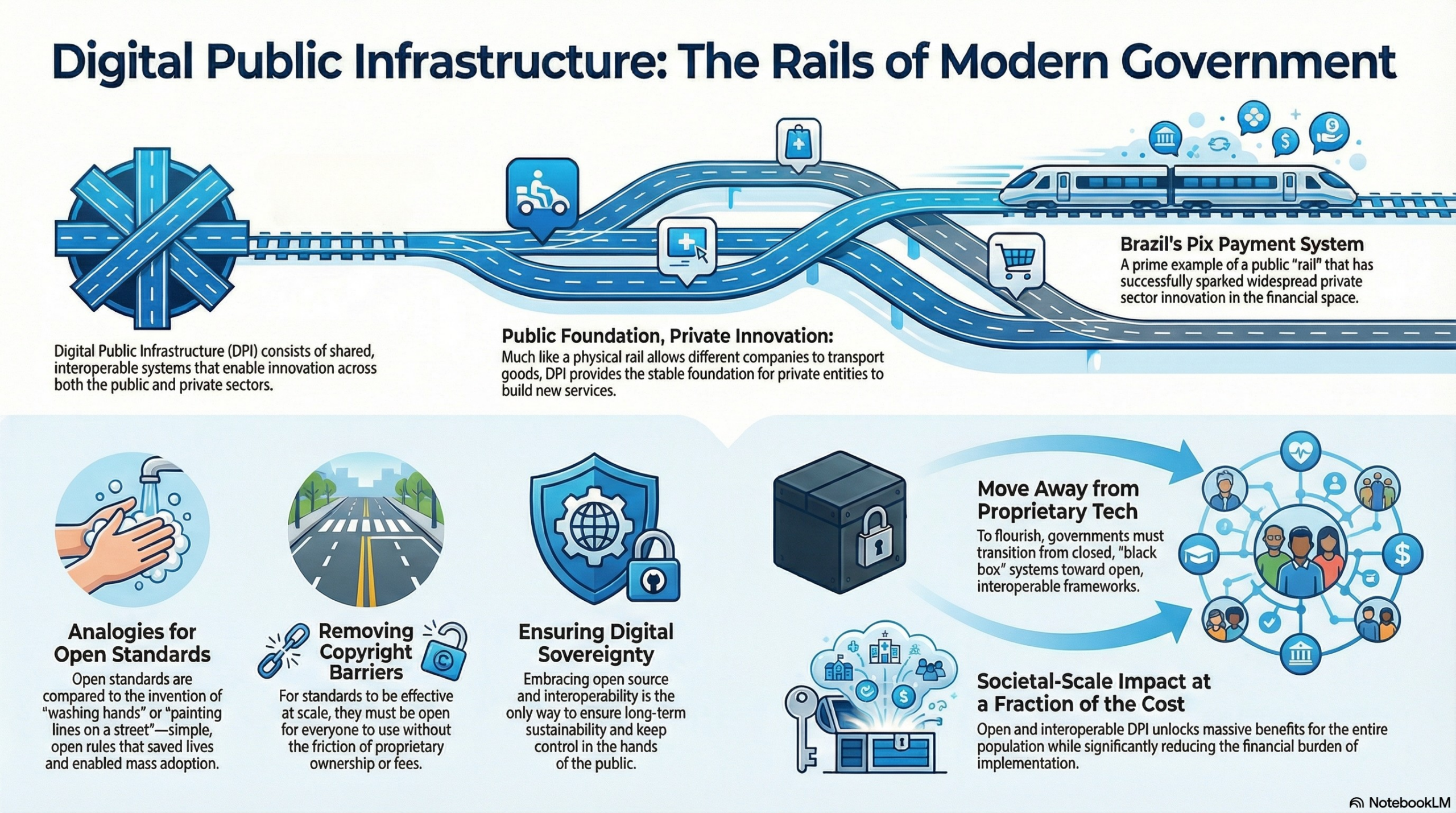
Digital Public Infrastructure (DPI) was described as the “highways and rails” of modern government – shared, interoperable systems that enable both public and private innovation.
Daniel Abadie, Sr. Technical Advisor & Head of Partnerships – CDPI, compared DPI to a “rail” that allows the private sector to build innovative services on top of stable public foundations, citing Brazil’s Pix payment system as a prime example of a public “rail” sparking private innovation.
Mara Balestrini, Strategic Advisor – LACNet, provided a graphic analogy for the power of open standards: they are like the invention of washing hands or painting lines on a street. These standards saved lives and enabled mass adoption because they were open for everyone to use without copyright barriers. For DPI to flourish, it must move away from proprietary technology and embrace open source and interoperability to ensure long-term sustainability and digital sovereignty.
Key takeaway: Open, interoperable DPI unlocks societal-scale impact at a fraction of the cost.
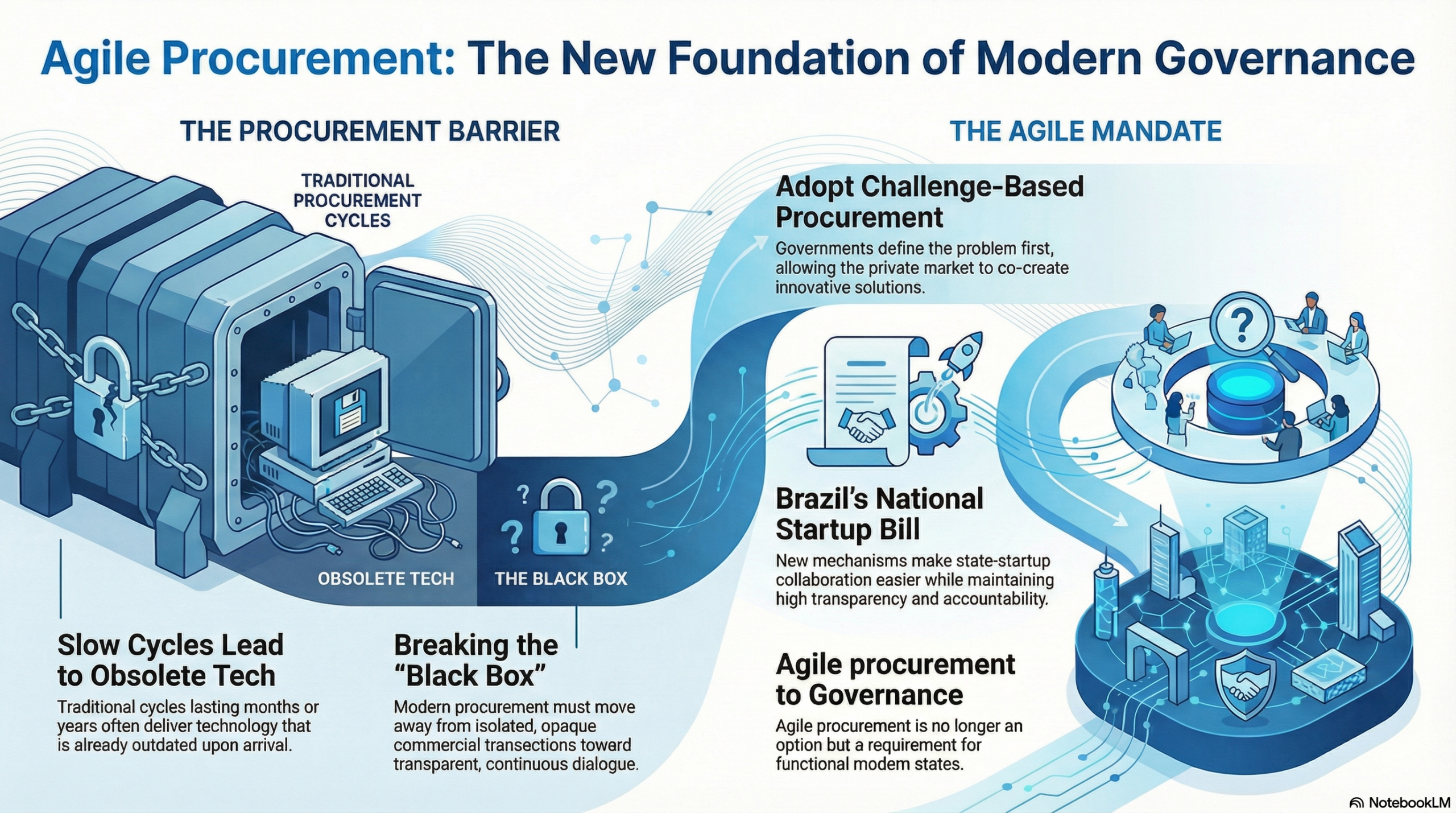
4. Agile Models are Mandatory
Traditional procurement emerged as one of the biggest barriers to innovation. With cycles lasting months or years, technology can become obsolete before it even reaches citizens.
Speakers like Idoia Ortiz de Artiñano Goñi, CEO and Co-Founder, Gobe, advocated for challenge-based procurement, where the government defines a problem and allows the market to co‑create solutions.
Brazil’s National Startup Bill stands out, introducing mechanisms that make it easier for startups to work with the state while maintaining transparency and accountability.
Procurement, speakers argued, cannot be a “black box” commercial transaction. It must be a continuous dialogue between public needs and private expertise, ensuring the state gets the best product for the best price.
Key takeaway: Agile procurement is not optional. It’s rather foundational to modern governance.
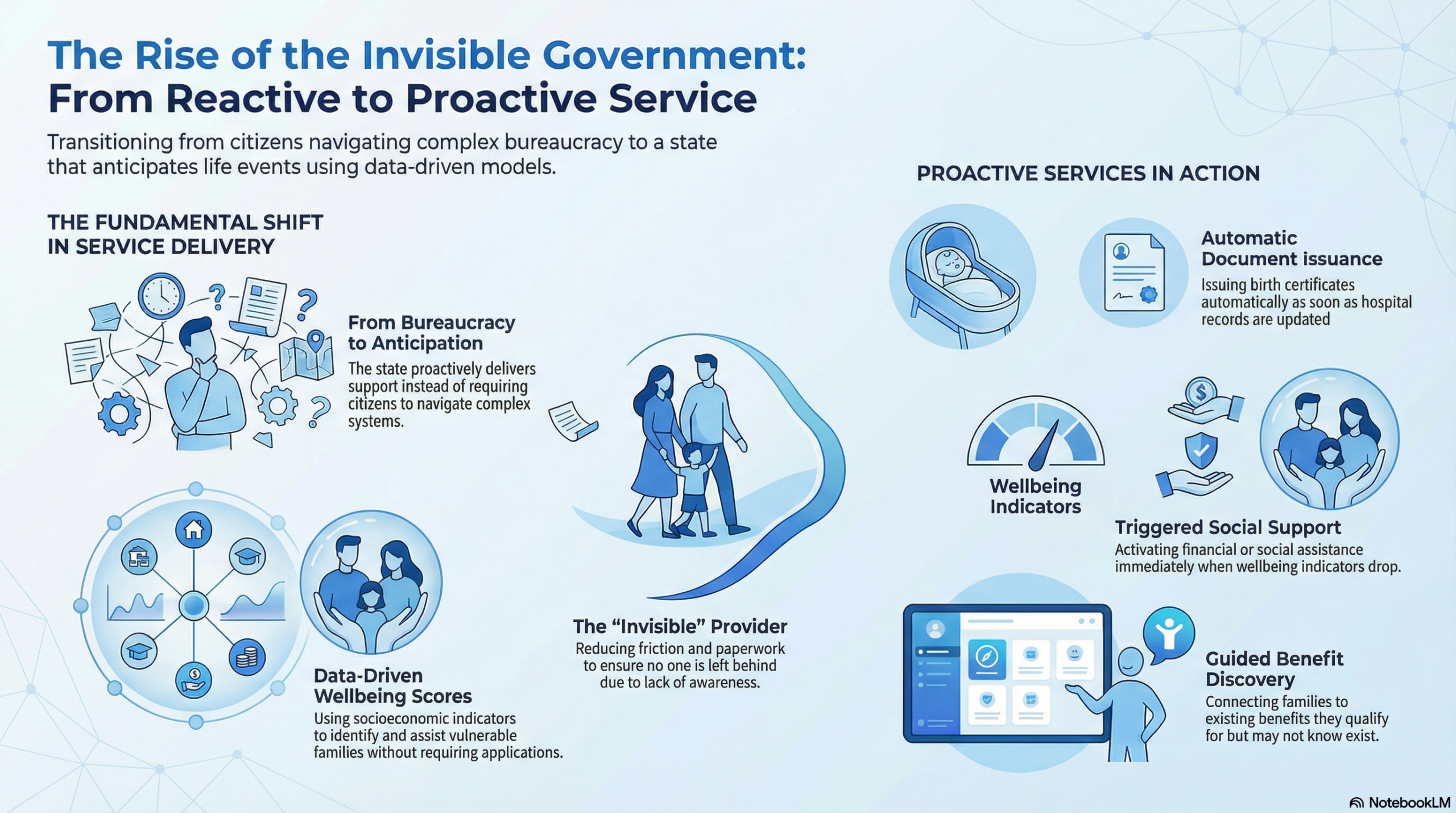
5. Transitioning to an “Invisible” and Proactive Government
A forward-looking theme that emerged at G4I 2025 was the shift toward proactive government services that reach citizens before they even need to ask. This evolution marks a profound change: from citizens navigating bureaucracy to the state anticipating needs and delivering support automatically.
Azamat Busurmankulov, Owner of BaiDen, illustrated this transition through the use of data-driven “wellbeing scores”. By analyzing life events and socioeconomic indicators, governments can identify families who may need assistance—without requiring them to fill out forms or submit applications.
This model enables services such as:
- Automatically issuing birth certificates after hospital records update
- Triggering social support when wellbeing indicators drop
- Guiding families to benefits they qualify for but may not know exist
The vision is an “invisible government”, not in the sense of being absent, but in removing friction, paperwork, and frustration from people’s lives. At the heart of this shift is a commitment to ensuring that vulnerable populations are not left behind simply because they lack time, access, or awareness.
Key takeaway: The next frontier of govtech is anticipatory, seamless, and human-centered, where the best service is the one the citizen never had to request.