
Innovating Under Fire: What Ukraine’s Digital State Teaches the World
In one of the Congress’s most extraordinary sessions, Valeriya Ionan described how a country at war turned crisis into the fastest digital transformation the world has seen, and why resilience cannot be improvised.
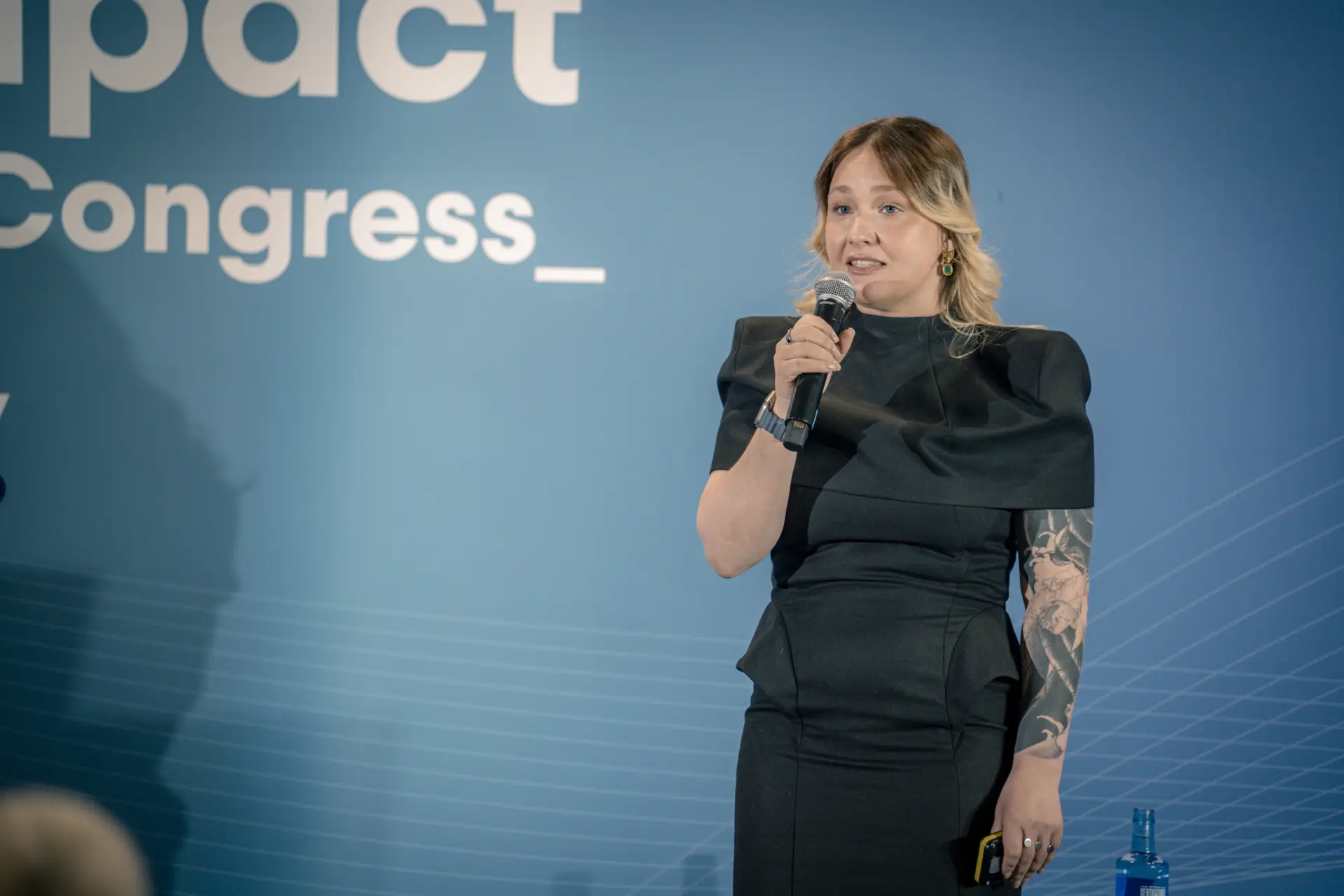
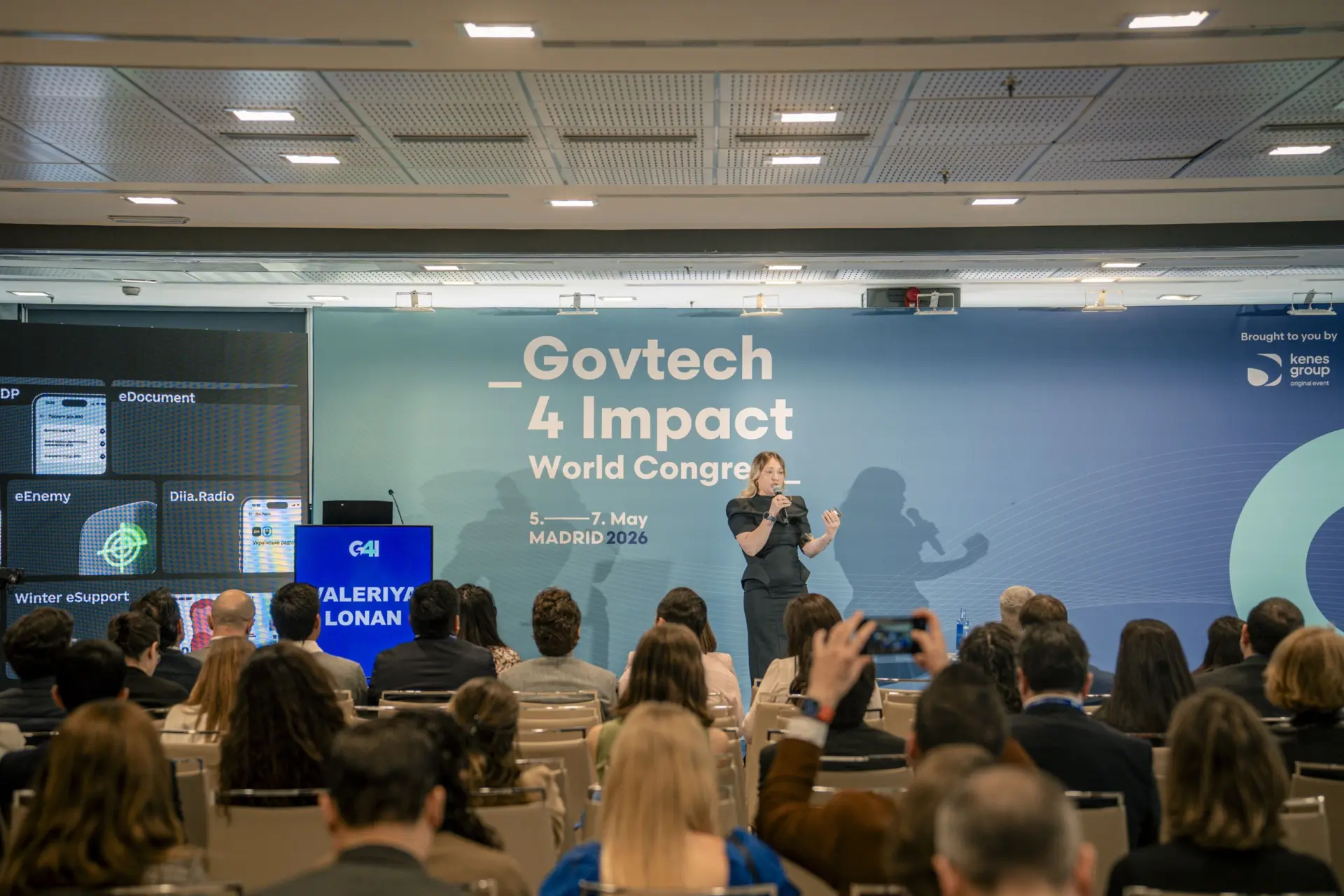
The premise of the keynote was almost counterintuitive: that breakthrough innovation comes less from abundance than from urgency. The moderator reached for analogies in elite sport, music, and the space race to make the point that sustained pressure can produce sharper execution than comfort ever does. Then Valeriya Ionan, strategic adviser to Ukraine’s Ministry of Digital Transformation and Ministry of Defence, spent the next stretch proving it with her own country’s example.
Ukraine’s digital transformation, she explained, began as a deliberate long-term reform and was then radically accelerated, first by COVID-19 and then, far more dramatically, by Russia’s full-scale invasion in 2022. The ambition is to build “the most convenient digital state in the world,” and the trajectory is remarkable: from 102nd place in 2018 to 5th globally in digital public services according to the UN E-Government Development Index, with strong showings in AI readiness and GovTech maturity besides.
A Platform That Reinvented Itself Under Attack
At the center sits Diia, which Ionan was careful to describe as more than an app – an ecosystem of state services spanning a super-app, a web portal, digital documents, and enabling infrastructure. The app now serves 24 million users and more than 80 services, and Ukraine became the first country where digital passports are fully equivalent to physical ones, a redesign not just of service channels but of the legal meaning of identity itself.
What made Diia indispensable was its capacity to adapt to wartime needs. When missile attacks forced civilians into shelters, TV and radio broadcasts were embedded in the app. When millions were displaced, a digital service let people register as internally displaced and receive support. Citizens could buy war bonds directly through the app, report enemy troop movements through a service called e-Enemy, and claim compensation for destroyed property through e-Recovery. Even the online marriage service, recognized by Time Magazine as one of the best inventions of 2024, carried weight beyond convenience: meaningful for military families separated by war, it saw 50,000 completed marriages and three million proposals – a measure, Ionan argued, of unusually high trust in government-built products.
That word, trust, recurred. Government technology, she argued, should not merely work; it should become a “love mark” – beautiful, modern, intuitive, desirable to use, competing with the best private-sector experiences rather than asking citizens to tolerate bureaucratic tools. Digitization also delivers measurable anti-corruption and efficiency gains, reducing leakage and discretion-based corruption while strengthening state capacity under extreme stress.
Removing Friction at Speed
The most transferable lesson came from Ukraine’s approach to innovation policy. Faced with urgent battlefield need, the government identified regulatory barriers to the drone industry and changed more than 30 resolutions in just four months. The result was dramatic industrial scaling: from seven drone producers in 2022 to roughly 100 in 2023, 300 in 2024, 450 in 2025, and nearly 600 at the time of speaking (May, 2026) – alongside more than 100 companies producing unmanned ground vehicles. The lesson was blunt: industrial and innovation growth can be catalyzed quickly when governments remove friction in response to genuine need.
For a sector-agnostic audience, her discussion of an emerging MedTech sandbox stood out – a real-world fast-track environment where start-ups test products directly in participating hospitals, receive feedback under practical conditions, and move quickly toward adoption if the technology performs. She contrasted this with “sandbox on paper” models that create process without meaningful validation, pointing toward a more operational path for evidence generation and system learning.
From Digital State To Agentic State
Ionan then made a conceptual leap. AI should not be seen merely as another application layered on legacy systems. It should become foundational to how the state is architected. Ukraine aims to be among the top three countries in public-sector AI adoption by 2030, with a national AI strategy near approval and a national large language model planned. Already live is Diia AI, described as the world’s first national AI assistant, which interprets citizen requests conversationally and routes them to services – in one example, a user simply requests an income certificate and receives it without navigating menus. The operating model is iterative and startup-like: test many use cases, find where the gains are real, then scale.
The final theme was defense innovation. Ionan described Brave1 as a defense-tech cluster and facilitator matching state needs private-sector solutions, and the country’s largest venture-style supporter in defense technology. Ukraine’s defense innovation cycle, she said, is exceptionally short – three to six months, and she offered a vivid example: after Russia blocked the Black Sea, Ukraine developed naval drones that struck the Crimean Bridge. When those were targeted from the air, Ukraine developed naval drones with integrated air-defense capability. The point was about the tempo. Products are tested in real conditions, iterated continuously, and judged on immediate relevance, while traditional multi-year grant cycles often outlast the innovation they fund.
Her broadest claim tied it all together. Resilience cannot be improvised at the moment of crisis. It has to be built in advance through infrastructure, leadership, digital capability, public trust, market design, and close collaboration between government and business. Digital maturity matters not only because it improves convenience in normal times, but because it becomes the substrate for continuity of services, emergency communication, and innovation when society is under the greatest strain. The moderator closed by linking Ukraine’s success to the solidarity and knowledge-sharing it received after 2022, and by underscoring that conversations about trust and innovation rest, ultimately, on safety and freedom.
Key Takeaways
- Urgency can compress years of transformation into months. Ukraine rose from 102nd to 5th globally in digital public services, with crisis accelerating reform rather than halting it.
- Government products should earn affection, not just function. Diia’s 24 million users and three million marriage proposals reflect a design philosophy that competes with the best private-sector experiences.
- Remove friction to catalyze industry. Changing 30+ regulations in four months helped scale Ukraine’s drone producers from seven to nearly 600 – a model for responsive innovation policy.
- Real sandboxes beat paper ones. Ukraine’s MedTech sandbox lets start-ups test directly in hospitals, offering a faster, more operational path to evidence and adoption.
- Resilience must be built in advance. Infrastructure, trust, leadership, and market design cannot be improvised in a crisis — digital maturity becomes the substrate for continuity under strain.
Read more from our Insights Hub...

Data as Soil, Not Oil: Pramod Varma on Building Infrastructure for a Billion People
Share this post on Social Media: The architect behind India’s Aadhaar argued that...
Read Article →Open‑Source Sovereignty for Modern Governments
Share this post on Social Media: During the Govtech 4 Impact World Congress...
Read Article →
Investors in B2G Spaces
Share this post on Social Media: Key Insights from Ibrahim Koeran and Adriano...
Read Article →