
Brains and Hands: Ott Velsberg on Building the Agentic State
Estonia’s former Chief Data Officer offered a concrete account of moving government beyond AI strategies and pilots toward measurable public value — with humans kept firmly in the loop.
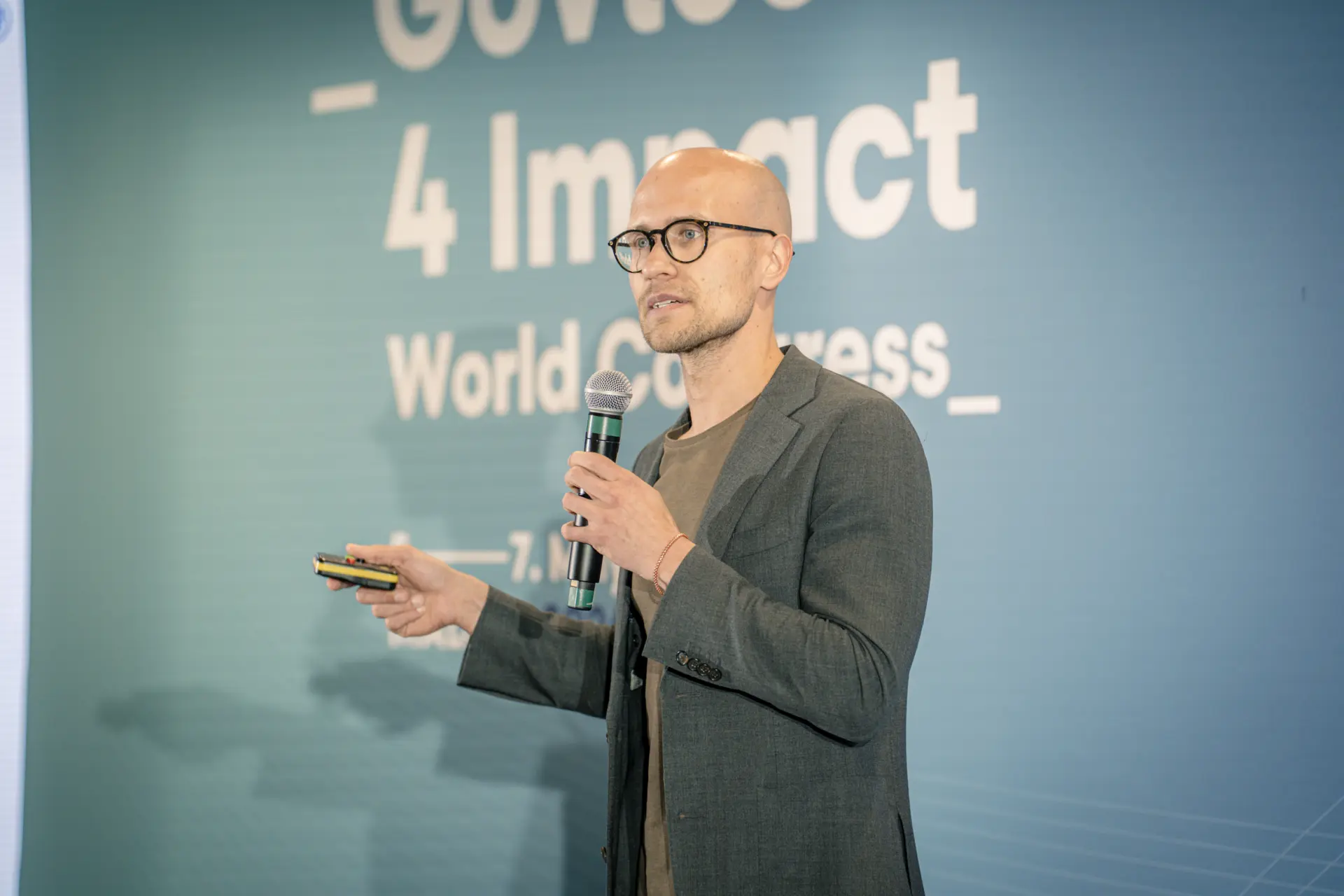
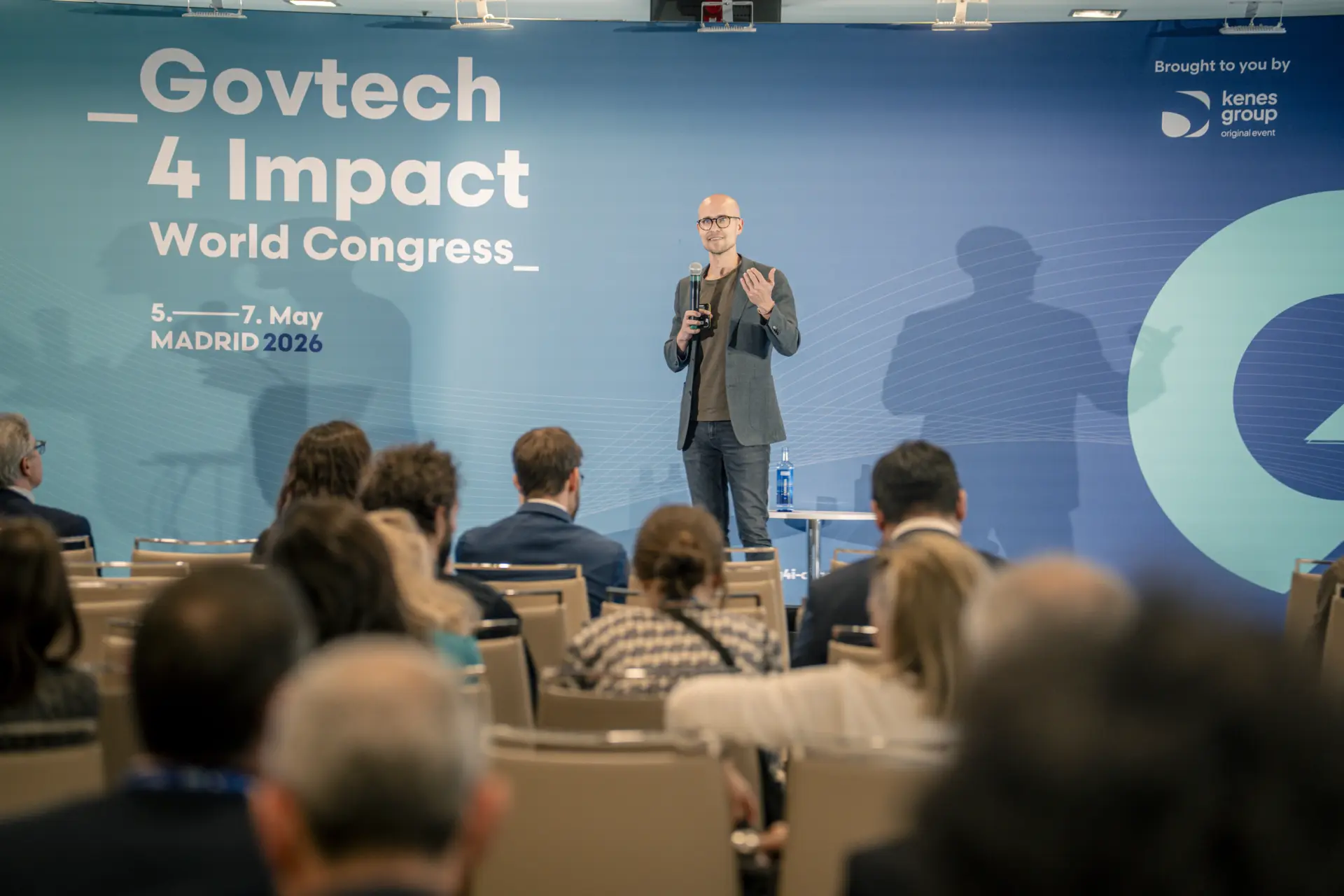
Ott Velsberg has watched the ground shift beneath his feet. When he joined Estonia’s government in 2018 as Chief Data Officer, he recalled, AI was not taken seriously – a handful of use cases, limited data stewardship, weak data-quality processes, and considerable skepticism among ministers and civil servants. There was resistance even to investing in data-science education. In this Main Stage keynote, he described how a country once skeptical of AI has made it a foundation of public-sector strategy and daily operations and offered a practical account of what the “agentic state” actually looks like.
Estonia’s evolution, he explained, came in phases: first an e-state focused on digitizing services, then stronger digital services that could outperform their non-digital equivalents, and now a transition toward an agentic, personal state where data and AI are used proactively to deliver services citizens might struggle to obtain through traditional channels. His analogy was memorable: AI now has both “brains” and “hands” — it can reason and act, not merely classify or recommend. For government, that means the possibility of reducing bureaucracy, accelerating case handling, and enabling more anticipatory services.
Nine Months For An Air Conditioner
He grounded the vision in personal grievance. He once waited nine months for approval to install an air-conditioning unit, despite having every required document. Processes like that, he argued, exemplify how administrative friction harms citizens and erodes trust. Estonia’s goal is to reduce such standard approvals to minutes, while accepting that complex or atypical cases will still require time and human review. Mapping the evolution of AI in government to the stages of vehicle autonomy – from fully manual to assisted, predictive, and semi-autonomous, he illustrated it with unemployment services, which moved from an expert job-matching system, to predictive analytics estimating who might become or remain unemployed, to assessing which interventions work best. The ambition is to shift from an unemployment agency that responds to a problem toward an employment agency that intervenes earlier and ideally prevents it.
The Metrics Of Maturity
Velsberg offered concrete indicators. About 51% of Estonian public-sector organizations have already adopted or implemented AI, compared with only four known use cases in 2018. Data-intensive companies generate close to €20 billion in revenue and grow at over 16% annually. Within government, AI-related efficiency gains run around €60 million per year, with a larger time-saving target by 2028. Roughly half of Estonians use AI daily, with higher uptake among the young and, importantly, common use among civil servants and executives too. The fear that once dominated, that AI would simply replace jobs, has given way to a more realistic view: confronted with the limitations and error rates of current systems, workers increasingly see AI as a productivity tool rather than a threat.
He structured Estonia’s strategy around three pillars – a data-driven state and economy, an AI-driven state and economy, and trustworthy human-centric AI – with a longer-term ambition to become, by 2035, the world’s freest and most self-functioning country powered by AI. A central enabler is a national competence model: a support structure helping ministries with AI development, procurement, implementation, funding, and data management, precisely because many organizations lack the internal capacity to build and deploy alone.
Where AI Is Already Working
The live examples were varied and instructive. A legal support service shifted part of the workload once handled by staff to an automated interface. AI-driven tax-fraud detection improved identification accuracy by nearly 59% – and, tellingly, created a new bottleneck, since the system now flags more suspect companies than the workforce can investigate. Velsberg drew the lesson explicitly: the value of AI depends not only on model performance but on the downstream capacity to act on its outputs. In social services, predictive tools estimate someone’s likelihood of finding work, though some predictions are deliberately not shared with citizens to avoid distress or self-fulfilling prophecies – a reminder that accuracy and ethics are not the same thing.
A particularly resonant example was Estonia’s genome portal, where more than 200,000 citizens have donated genomic data, enabling personalized information on disease risk and lifestyle, including risks related to breast cancer and the impact of smoking cessation. Other uses spanned environmental monitoring, forestry oversight, and procurement automation – the last targeting what he called one of the most disliked tasks in government. Throughout, he emphasized shared national AI components and open-source tools, and language technology as especially important for a smaller-language country seeking to avoid dependence on poorly adapted tools.
The Right To Dispute
On governance, Velsberg described centralizing risk and privacy support – a central risk registry and centrally conducted data-protection impact assessments that organizations can adapt – alongside a combined technical and regulatory sandbox that lets innovators test in live public settings rather than purely theoretical pilots. Education featured too: an AI Leap initiative, a national campaign to improve data and AI literacy among roughly 100,000 people, and work to introduce data and AI topics from the first grade, with emphasis on risks, privacy, and intellectual property rather than handing children tools indiscriminately.
His closing principle was non-negotiable: human-centric AI means individuals must always retain the right to dispute decisions made by AI systems, in both public and private sectors. Principles alone, he argued, are insufficient; they must become practical rights, interfaces, and accountability mechanisms citizens can actually use. His strongest example was Estonia’s data tracker, which lets people see who accessed their personal data, when, and why — with over 100,000 queries per week and a peak of 450,000 users in a single week during a public scandal. He also described a consent service giving people greater control over who may process their data, the legal basis for which took six years to secure against resistance. True transparency, he concluded, is achieved not by policy statements but by giving citizens concrete visibility and control – the heart of an agentic state that keeps humans firmly in the loop.
Key Takeaways
- AI now has brains and hands. It can reason and act, not just recommend – enabling proactive, anticipatory services that reduce bureaucracy and accelerate case handling.
- Maturity is measurable. With 51% of public organizations using AI and €60 million in annual efficiency gains, Estonia shows AI policy can support state capacity and competitiveness.
- Model performance is only half the value. Better tax-fraud detection created a new bottleneck – AI’s impact depends on the downstream capacity to act on its outputs.
- Accuracy and ethics are not the same. Some accurate predictions are withheld from citizens to avoid distress or self-fulfilling prophecies – a crucial caution for predictive public systems.
- Transparency means concrete rights. The data tracker and consent service give citizens real visibility and control, and the right to dispute AI decisions is treated as non-negotiable.
Read more from our Insights Hub...
Open‑Source Sovereignty for Modern Governments
Share this post on Social Media: During the Govtech 4 Impact World Congress...
Read Article →
How Is AI Reshaping Public Administration
Share this post on Social Media: As governments worldwide embrace digital transformation, AI...
Read Article →
GovTech Needs to Bring These Worlds Together: A Conversation with Jonas Onland
Share this post on Social Media: Jonas Onland is Chief Vision Officer at Serendipity...
Read Article →