Legacy Isn’t an Old Code. It’s an Outdated Way of Working
A Main Stage panel argued that modernising government means redesigning operating models, evidence pathways, and institutional habits, not just replacing the software underneath.
The title of the session promised a conversation about legacy systems. What the panel actually delivered was a quiet redefinition of the word “legacy” itself. The real legacy holding governments back, the speakers agreed, is rarely just old code. It is outdated operating models, siloed structures, fragmented data, risk-averse cultures, and policy processes no longer fit for modern expectations.
Moderating, Miguel Porrúa, Digital Government Principal Specialist, Inter-American Development Bank, framed the central challenge as the transition from legacy to agile government – a shift that extends well beyond infrastructure into culture and organizational inertia. He kept steering the panel toward the practical: how science should inform policy, how AI changes the modernization agenda, what interoperability really requires, and how to make transformation durable rather than cyclical.
Evidence, and its discontents
Isabelle Hupont, Scientific Advisor in the cabinet of the Ministry of Science, Innovation, and Universities, Government of Spain, made the case for embedding scientific evidence close to power. Spain places scientific advisers near ministers and the presidency, making expertise operationally accessible rather than distant and academic. She illustrated the value with the example of wildfires, where advisers from multiple ministries were mobilized rapidly during an emergency – a reminder that scientific advice matters not only in obviously technical ministries but in transport, interior, and beyond. Yet she was clear that policymakers cannot rely on scientific advice alone; regulation must also weigh geopolitical, legal, economic, and societal constraints. Future-proofing regulation is hard precisely because technologies like AI evolve faster than legislative cycles.
Frontier government, and the data underneath it
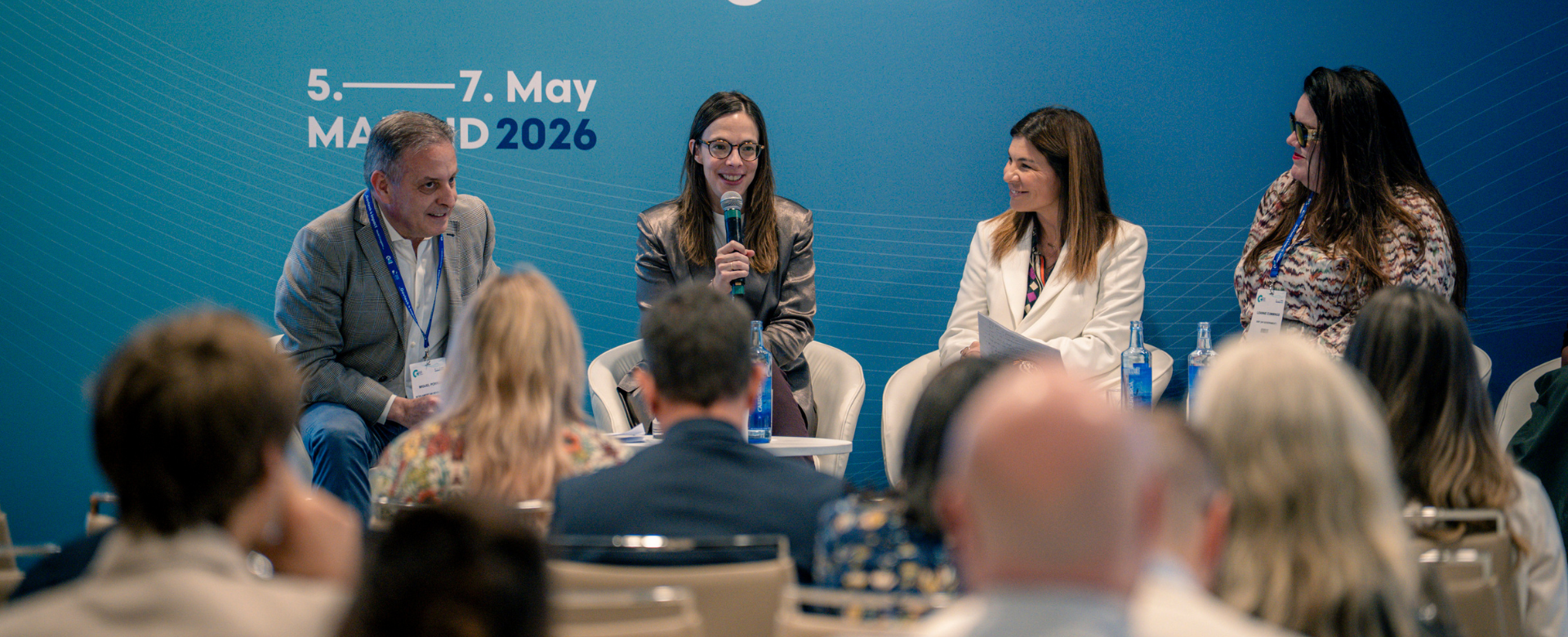
Ana Rita Pereira, Director, Government Affairs, Microsoft, G4I 2026 Expert Committee, urged the panel to move beyond the narrow idea of legacy as “old code,” describing the evolution from e-government, which digitised access, to digital government, which improved identity and interoperability, to what she called an AI-driven “frontier government.” Her warning was direct: if governments simply layer AI on top of unchanged bureaucratic processes, they will hit a plateau. AI offers a chance to invert the citizen–government relationship. Instead of citizens navigating systems and chasing administration, governments could integrate information in the background and respond proactively.
But in the rapid-fire round she became blunt about why these stalls. Many governments run AI pilots; only a small minority reach production. The blockers are not the tools, but regulation, procurement, workforce capability, and, most critically, data. AI is a change-management challenge, not a purely technical one, and most of the effort in any AI project lies in data integration, quality, and sharing. On sovereignty, she cautioned against simplistic definitions, framing it as a balancing act across innovation, regulation, resilience, cybersecurity, and continuity rather than a binary choice between local and external technology.
Interoperability, trust, and irreversibility
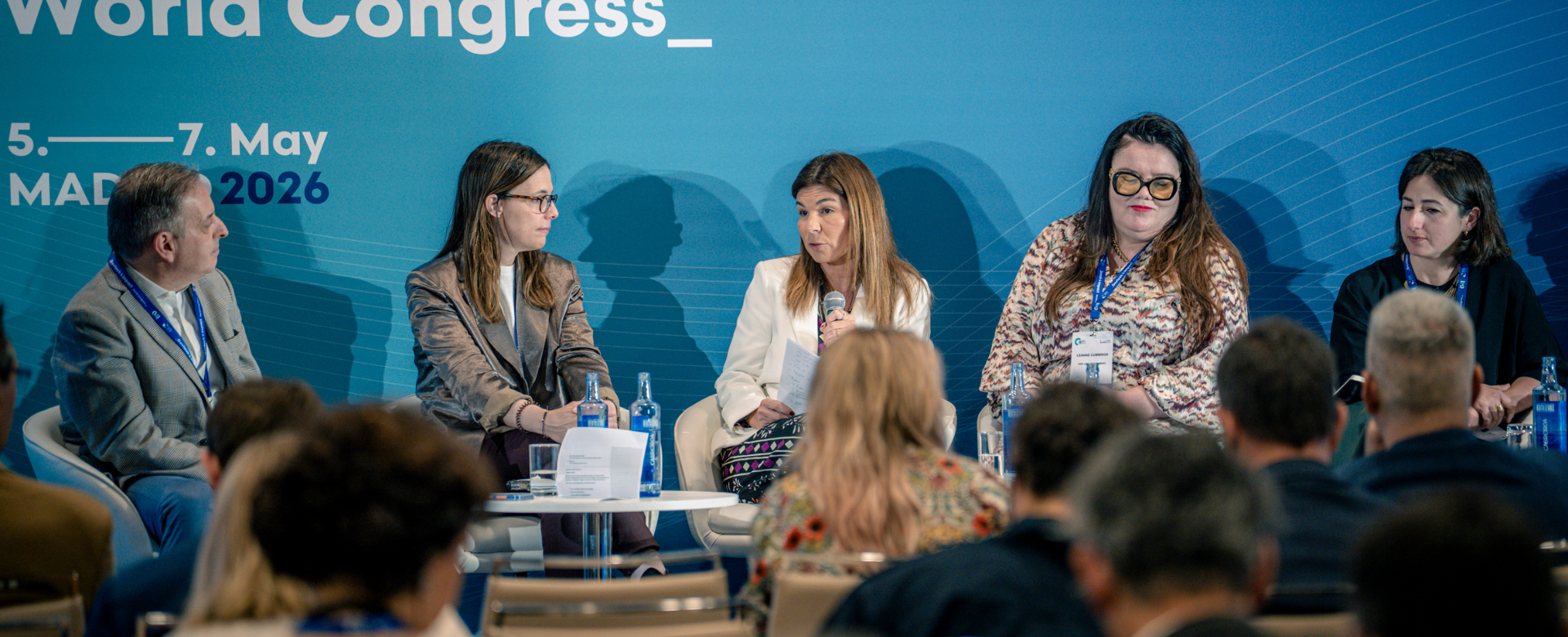
Leanne Cummings, Director, Government Digital Service (GDS), United Kingdom, spoke to interoperability with hard-won realism. It benefits both citizens and government, less friction, less duplication, but it is exceptionally hard, and the barriers are not technical. They are culture, departmental incentives, procurement constraints, and performance metrics that reward departmental optimization over cross-government integration. Even when everyone agrees interoperability is desirable, prioritization and accountability get in the way. On adoption, she argued citizens must be met where they are, through multiple access modes, and that services earn engagement by creating continuing value rather than one-time transactions.
Sarah Gold, Founder and CEO, Projects by IF, focused on innovation, trust, and service design. Her principle was that innovation begins with actually using technology, getting hands dirty to understand its properties and the new experiences it enables, not discussing it abstractly. New technologies, she argued, may let governments redesign the service itself around what citizens truly need, rather than around inherited administrative categories. On trust, she offered one of the session’s most nuanced ideas: governments should not maximize trust uncritically but calibrate it, supporting citizens to ask questions and understand trade-offs. Both blind compliance and deep mistrust are undesirable; the goal is an informed, active public.

Giulio Quaggiotto, Advisor, Prime Minister’s Office, United Arab Emirates, introduced the panel’s most conceptual idea: irreversibility. He encountered it in an Indonesian digital unit worried that a successful reform might be dismantled by a future minister. He distinguished irreversibility from immutability and inevitability, defining it as the preservation of optionality: keeping options open and adapting under uncertainty. Governments, he noted, are better at managing risk than uncertainty, and many public strategy processes are themselves legacy systems: siloed, disconnected from implementation, lacking feedback loops. He also flipped a common question, asking not whether citizens trust the state but whether the state trusts citizens, and whether the goal of seamless, invisible government might obscure the very processes that sustain legitimacy.

Córdoba: the proof in practice
If the panel risked floating into theory, Ignacio Gei, Secretary of Smart City and Digital Transformation, Municipality of Córdoba, Argentina, anchored it. He described a city that two years earlier ran on slow, fragmented, paper-heavy administration supported by around 40 disconnected systems using different languages and databases. Rather than continuing piecemeal, Córdoba built a single integrated, intelligent platform, replacing systems step by step while keeping services running and largely invisible to users. The results were concrete: 70% of citizen requests now start online; average resolution times fell from 20 days to 4; resolution rates exceed 90% across the first 60,000 requests; in-person transactions dropped sharply; and the city estimates over five million dollars saved in the first year. Crucially, it trained more than 3,000 public employees, changing mindset as well as tools.
It was the clearest demonstration of the panel’s thesis. Modernization is not a software upgrade. It is a redesign of data architecture, institutional incentives, strategy processes, citizen relationships, and workforce skills — done without losing legitimacy or interrupting the services people depend on.
Key Takeaways
- Legacy is an operating model, not just old code. The deeper obstacles are siloed structures, fragmented data, and risk-averse cultures — layering AI on top of these only hits a plateau.
- Data is the real blocker for AI. Most government pilots fail to reach production because of data quality, integration, procurement, and workforce capability — not the technology itself.
- Interoperability is a cultural problem. Its barriers are incentives, procurement, and departmental metrics, not technical limitations — even when everyone agrees it is desirable.
- Calibrate trust, don’t maximize it. The goal is an informed, questioning public — neither blind compliance nor deep mistrust serves good digital government.
- Córdoba shows it can be done. Replacing 40 disconnected systems with one platform cut resolution times from 20 days to 4 and saved over $5 million — by redesigning the operating model and retraining 3,000 staff.
