The 85% Gap:
Why Governments Must
Prioritize Skills for the
Next Disruptive Wave
with Chris Ferguson
The 85% Gap: Why Governments Must Prioritize Skills for the Next
Disruptive Wave
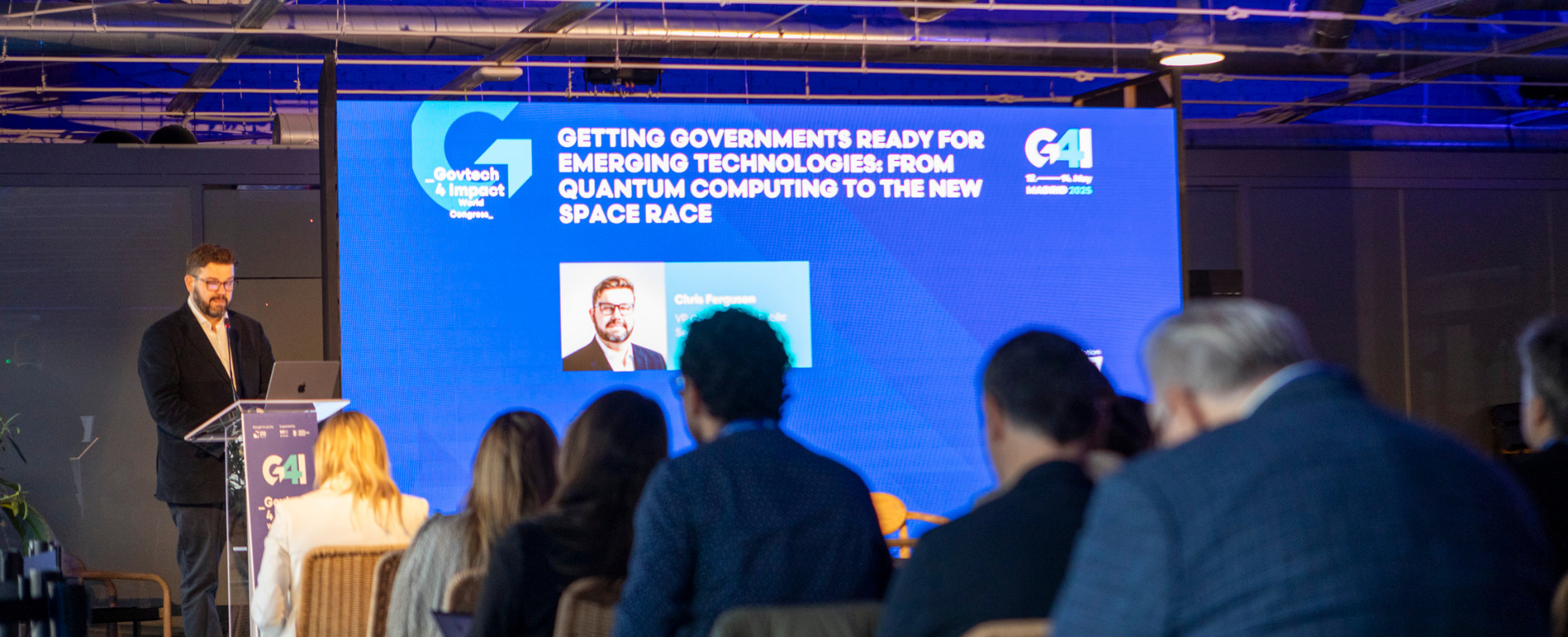
In his keynote session during the GovTech 4 Impact World Congress 2025, Chris Ferguson, Vice President of Government and Public Sector at Apolitical, illuminated the urgent need for governments to look beyond current artificial intelligence trends and prepare for a “next wave” of disruptive technologies. Ferguson, whose expertise is rooted in a 20-year career with the UK government, including a decade leading the Government Digital Service (GDS), argued that the global public sector must transition from being a passive manager of technological consequences to a proactive architect of the future.
The AI Paradox: High Adoption, Low Training
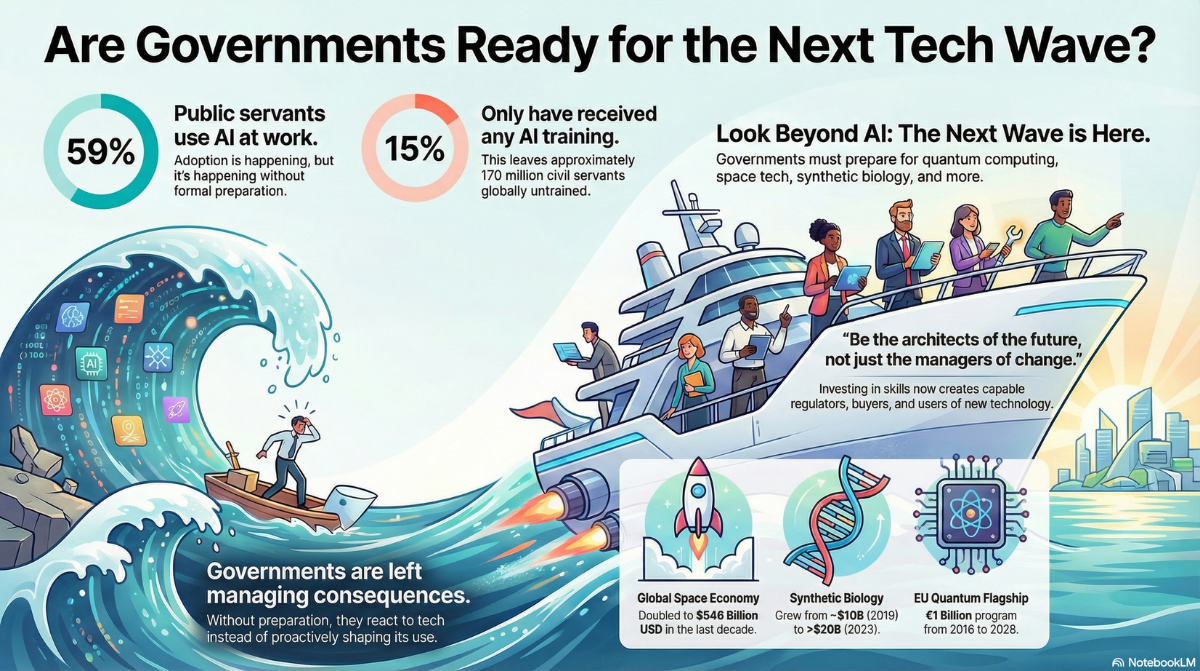
Current data from Apolitical reveals a troubling gap in the “AI age.” While 59% of public servants are already using AI tools, only 15% have received any formal training. This means that out of approximately 200 million civil servants globally, roughly 170 million are navigating world-changing technology without guidance on best practices, ethics, or risks.
Ferguson emphasized that this is a missed opportunity for strategic governance. Without training, governments are left “scrambling for the correct policy” only after a technology has already disrupted the market.
The Speed of Technological Advancements
Ferguson highlighted the rapid pace of technological evolution. The global space economy alone has doubled in size over the last decade, reaching a staggering $546 billion. Countries such as the UAE, India, and Turkey are emerging as key players in the space race, sending probes to Mars, landing on the moon, and building rocket launch facilities.
Quantum computing, once a niche area of research, is now a focus of heavy investment from governments and tech giants alike. With nations such as China, the US, and several European countries pouring billions into quantum research, Ferguson emphasized that governments are no longer merely regulators in this field but active participants in shaping its future.
The Role of Emerging Technologies in Government
Ferguson then turned his attention to how governments can prepare for the transformative impact of these technologies. Emerging technologies, by definition, have the potential for massive disruption, often challenging existing practices and creating opportunities for major societal shifts. These technologies span multiple disciplines, such as biotechnology, nanotechnology, and AI, and their scalability could redefine industries across the globe.
The challenge for governments, according to Ferguson, lies in proactively preparing for these shifts rather than reacting once they occur. Historically, governments have been slow to address the implications of new technologies. This has often left them scrambling to regulate, adapt, and mitigate unforeseen consequences. Ferguson stressed the importance of adopting adaptive frameworks for managing the opportunities and risks posed by emerging technologies.
Preparing Workforces for the Future
One of the central themes of Ferguson’s keynote was the need to build the skills and capabilities of government workforces. While many public servants are already using AI, the skills gap remains vast. Ferguson’s call to action was for governments to invest in training and education for their civil servants. He highlighted that in the rapidly evolving world of technology, governments must not only keep pace with change but also lead in shaping how these technologies are regulated and deployed.
At Apolitical, Ferguson’s team is committed to addressing this gap through initiatives like the Government AI Campus, which aims to prepare a million public servants for the age of AI. This initiative reflects the broader mission of Apolitical, which works to make governments smarter by providing access to a global network of public servants and policymakers. Apolitical’s platform enables these professionals to share best practices and upskill themselves in key government priorities, ensuring that they are ready for the challenges and opportunities emerging technologies present.

Why We Need to Think Beyond AI
While AI has rightfully garnered significant attention, Ferguson encouraged the audience to look beyond AI at the next wave of technologies. He pointed to advances in synthetic biology, such as the development of lab-grown human blood and successful animal trials in gene editing, as indicative of the immense potential of emerging science. Other areas like geoengineering for climate change mitigation and fusion energy are also poised to have profound impacts on society and require immediate consideration by governments.
For Ferguson the race for emerging technologies will shape the future in ways that are difficult to predict. Governments that fail to prepare will find themselves managing the consequences rather than taking the lead in shaping the future. “Governments need to be the architects of the future, not just the managers of change,” he said.
Building a Strategic Vision for the Future
To ensure governments are ready for the challenges of emerging technologies, Ferguson advocated for a two-pronged approach. First, governments must build their capacity to understand, regulate, and leverage new technologies. Second, they need to ensure that their workforce is equipped with the right skills and knowledge to effectively deploy these technologies in the public sector.
Ferguson envisions a world where governments have proactively planned for the arrival of disruptive technologies, and public servants are prepared to use these tools with confidence. He urged governments to act now, so they aren’t left scrambling when the next big technological breakthrough arrives.
“Imagine a scenario where, instead of scrambling to regulate or adapt when ChatGPT launched, governments confidently said, ‘We anticipated this; we have a plan, and our workforce is ready.’ That is the future we should be striving for,” Ferguson concluded.
Key Takeaways:
- Emerging technologies are shaping the future: Technologies like quantum computing, space exploration, and synthetic biology are no longer science fiction; they are happening now and governments need to be proactive in preparing for them.
- Skills gap in the public sector: While many public servants are using AI, only a small percentage have received formal training in its use. This gap must be addressed for governments to leverage the full potential of these technologies.
- The need for early preparation: Governments must prepare their workforces to understand, regulate, and deploy new technologies effectively. This requires adaptive frameworks and upskilling initiatives.
- A call for international cooperation: Collaboration between governments, tech industries, and international organizations is crucial in managing both the opportunities and risks posed by emerging technologies.
- Governments as architects of the future: Governments must lead the charge in adopting and regulating new technologies. With the right investment in training and foresight, they can guide the technological transformation rather than merely respond to it.